Stablecoins are reshaping B2B payments with faster settlement and clearer costs. Learn what’s driving the $3B surge and why timing matters. Explore now.
B2B payments are undergoing a structural shift.
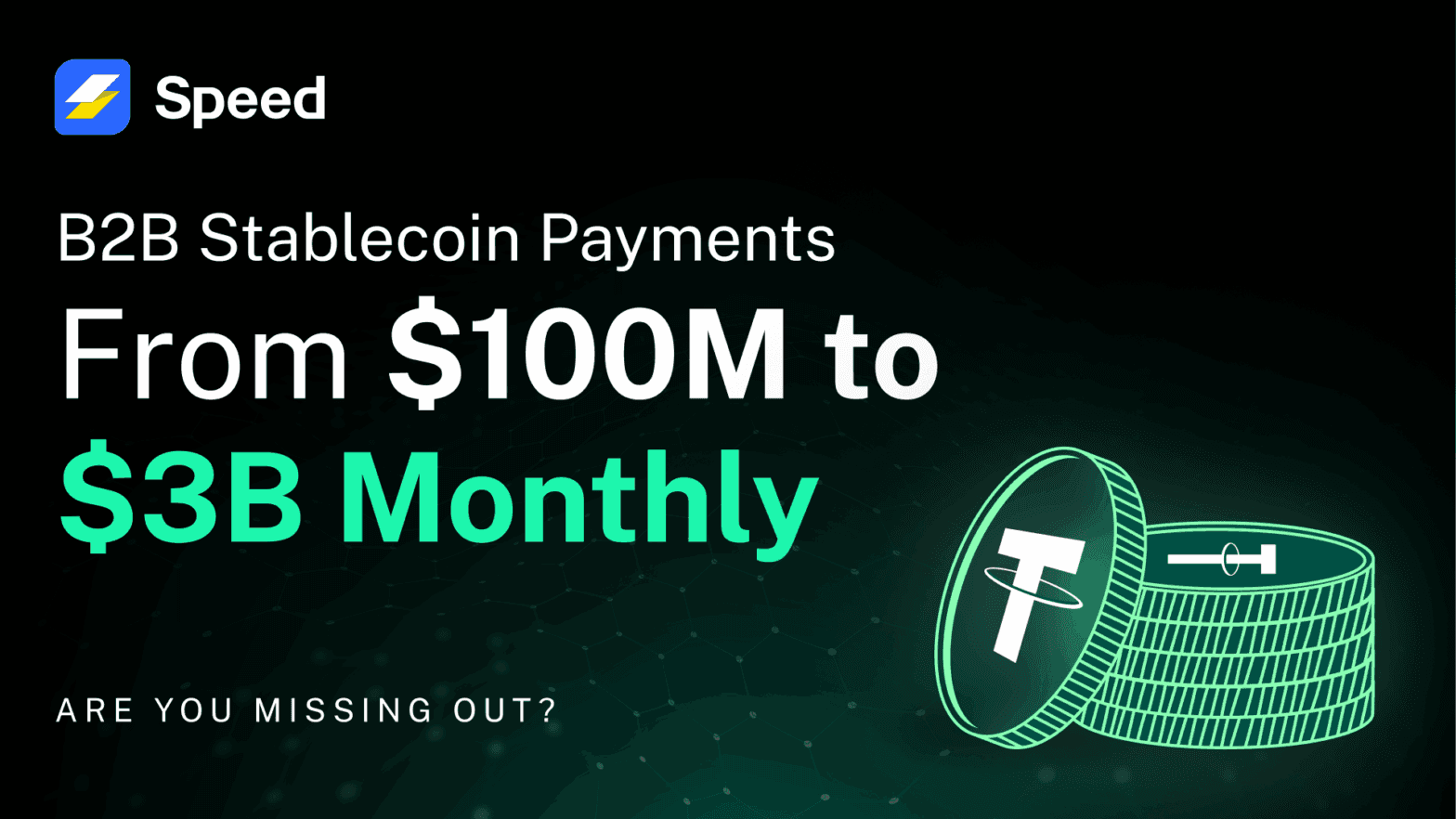
What started as limited experimentation with digital dollars has turned into a serious payment rail for global businesses. Monthly stablecoin settlement volumes in B2B transactions have grown from roughly $100 million to nearly $3 billion, driven by real operational needs and not only by market speculation.
Companies moving money across borders are looking for faster settlement, clearer costs, and fewer dependencies on traditional banking systems. Stablecoins are meeting those expectations, quietly becoming part of everyday payment operations for finance teams worldwide.
Why B2B payments are being rethought
Global vendors, remote teams, digital services, and international customers require payment systems that function across time zones and currencies. The way businesses move money has not kept pace with how they operate. Traditional B2B payment methods often struggle in this environment due to delays, manual processes, and limited visibility into costs.
Common challenges include:
Settlement times stretch across multiple business days.
Fees are added at several points in the payment chain
Currency conversion losses that are difficult to forecast
Reconciliation work spread across banks and systems
Interruptions caused by banking hours and regional holidays
As the transaction volume is increasing, these frictions grow more expensive. Many businesses now view payment efficiency as a core operational metric, not as a concern of the back office.
What’s behind the jump from $100M to $3B per month
Stablecoin adoption accelerated once the technology aligned with business requirements.
Stable value for commercial use
Fiat-backed stablecoins such as USDT and USDC maintain price consistency, which allows businesses to invoice, settle, and account for payments without exposure to market swings. This stability made stablecoins usable for supplier payments, payroll, and recurring settlements.
For finance teams, predictable value removed a major barrier to adoption.
Faster cross-border settlement
International payments remain one of the biggest bottlenecks in B2B operations. Stablecoins move across borders in minutes, regardless of location or banking infrastructure. Funds can be received, confirmed, and redeployed almost immediately. This speed improves the cash flow planning and also strengthens supplier relationships, specifically in regions where banking access is limited or unreliable.
Clear and transparent costs
Traditional international payments often include layered fees that are only visible after settlement. Stablecoin transactions provide upfront clarity, with costs that remain consistent regardless of destination.
For businesses processing large volumes, this transparency supports better forecasting and tighter financial control.
Enterprise-ready compliance and reporting
Adoption expanded once stablecoin payment infrastructure matured. Modern payment processors now offer:
KYB and compliance checks
Transaction monitoring
Detailed settlement records
Exportable reports for accounting and audits
These capabilities made stablecoins practical for regulated businesses operating at scale.
How businesses are using stablecoins today
Stablecoins are now part of everyday payment workflows across multiple sectors.
Suppliers and vendor payments
Manufacturers and distributors settle invoices with overseas suppliers faster while avoiding currency conversion delays.
SaaS and digital services
Subscription-based companies receive international payments with immediate confirmation, reducing revenue recognition delays.
Marketplace and platforms
Platforms rely on stablecoins to pay sellers and partners efficiently, especially when operating across multiple regions.
Global payroll and contractor payments
Companies pay international teams without navigating local banking complexities or long settlement cycles.
Treasury and liquidity management
Some businesses hold stablecoins as working capital, allowing for the rapid movement of funds between markets without the need to open new bank accounts.
Stablecoin vs traditional B2B payment method
Area | Traditional B2B Payments | Stablecoin Payments |
Settlement Time | Several business days | Minutes |
Availability | Limited to banking hours | Continuous |
Cost Visibility | Variable and opaque | Clear and predictable |
Reconciliation | Manual and fragmented | On-chain and traceable |
Cross-border Reach | Bank-dependent | Borderless |
Scalability | Cost rises with volume | Efficient at scale |
Stablecoins are increasingly viewed as an additional payment rail that complements existing systems, especially for international transactions.
Why delaying adoption has consequences
Businesses that rely exclusively on legacy payment rails face growing disadvantages.
Payment delays affect suppliers’ trust. High transaction costs reduce margins. Slow settlement limits expansion into new markets. Over time, these factors influence competitiveness.
As stablecoin payments become more common in B2B contracts, companies without this capability may find themselves excluded from certain partnerships or required to absorb higher costs to remain competitive.
What matters most to decision makers
Adoption decisions are driven by practical outcomes, and various teams prioritize and focus on different factors.
Finance teams focus on:
Lower transaction costs
Faster access to funds
Reliable settlement records
Audit and compliance readiness
Operations teams prioritize:
Fewer failed or delayed payments
Reduced manual intervention
Simpler reconciliation workflows
Growth teams look for:
aster market entry
Easier partner onboarding
Payment systems that scale globally
Stablecoin payments address all three areas when implemented through the right infrastructure.
The importance of payment infrastructure
Direct interaction with blockchain networks is not practical for most businesses. Adoption depends on payment platforms that simplify the experience. Today, multifunctional infrastructures like Speed offer:
Support for multiple stablecoins and Bitcoin
API-based integrations
Checkout and invoicing tools
Automated settlement and reporting
Lightning and on-chain payment options
This allows businesses to use stablecoins as a payment method without changing how teams operate day to day.
What comes next for B2B stablecoin payments
The rise from $100M to $3B in monthly volume signals an early stage of a broader shift. Future developments are more likely to include:
Deeper integration with ERP and accounting software
Stablecoin-native invoicing and settlement
Faster payouts are becoming standard in B2B
Wider adoption in emerging markets
Greater regulatory clarity supporting enterprise use
Stablecoins are increasingly positioned as core financial infrastructure rather than a niche alternative.
Final thoughts
Businesses that send or receive international payments, manage global vendors, or process high-value B2B transactions are already affected by this change.
Stablecoin payments have grown because they reduce friction where traditional systems struggle. The increase in monthly volume reflects a clear pattern of adoption driven by efficiency and scale.
The next phase of growth will favor companies that adapt their payment stack early.
The question now is whether your business will move with this shift or react after it becomes a requirement.